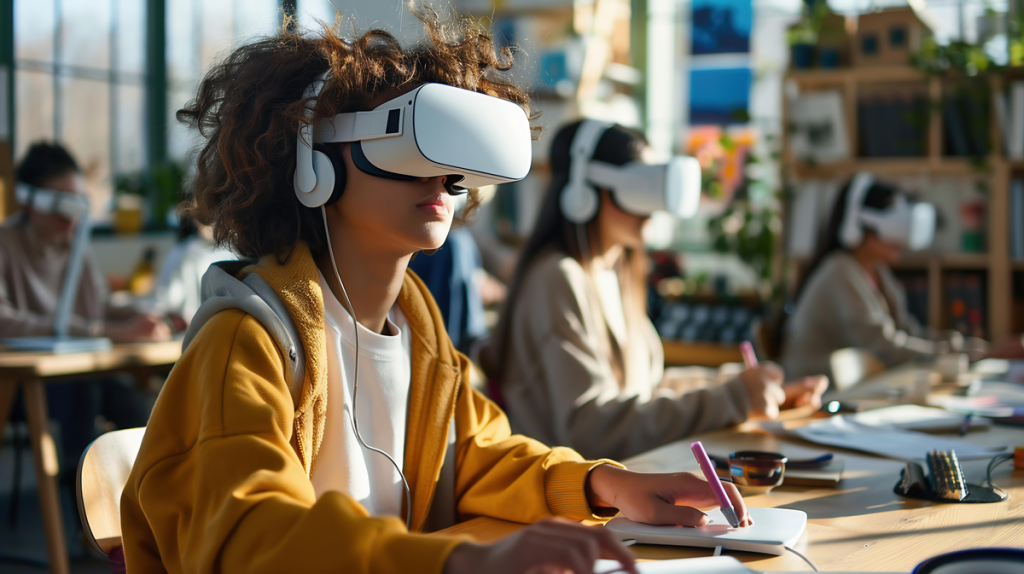

Technology is changing the way people interact with digital information, entertainment, education, and the world around them. Virtual Reality (VR) and Augmented Reality (AR) are two important technologies helping create these changes. They allow people to experience digital content in ways that go beyond traditional computer screens and smartphones.
Virtual Reality places users inside a computer-generated environment, while Augmented Reality adds digital elements to the real world. Both technologies are becoming more useful in areas such as gaming, healthcare, education, shopping, engineering, and business.
Although VR and AR have different purposes, they share a common goal: making digital experiences more interactive and engaging. As devices become more advanced and accessible, these technologies may play a larger role in everyday activities.
Understanding Virtual Reality Technology
Virtual Reality is a technology that creates a simulated digital environment. Users can explore this environment through special headsets that cover their eyes and display computer-generated images.
A VR headset usually contains screens, lenses, sensors, and motion-tracking technology. These components work together to create the feeling of being inside a different place. When users move their heads, the displayed environment changes according to their movements.
Some VR systems also include handheld controllers that allow users to interact with virtual objects. More advanced systems may support hand tracking, body movement, and additional accessories that make experiences feel more realistic.
For example, someone using a VR headset can explore a virtual museum, walk through a digital city, or participate in a simulated training exercise without physically traveling to those locations.
Virtual Reality is especially useful when people need an immersive experience that separates them from their actual surroundings.
What Is Augmented Reality?
Augmented Reality adds digital information to a person’s view of the real world. Instead of replacing the surrounding environment, AR combines real-world images with virtual elements such as graphics, labels, animations, and 3D objects.
Many people have already experienced AR through smartphone applications. Some apps allow users to place virtual furniture inside a room using their phone’s camera. Others display interactive effects, digital characters, or helpful information over real-world objects.
AR can also work through specialized glasses and headsets. These devices may display instructions, navigation information, or digital models while users continue seeing their physical surroundings.
For example, a person repairing a machine could use AR glasses to view instructions directly over the equipment. This may reduce the need to repeatedly check a separate manual.
The main advantage of Augmented Reality is that it provides useful digital information without removing users from their real environment.
Key Differences Between VR and AR
Virtual Reality and Augmented Reality are related, but they provide different types of experiences.
VR creates a completely digital environment. Users generally wear a headset that blocks most of their direct view of the surrounding world. This makes it suitable for immersive games, simulations, virtual tours, and training activities.
AR keeps the real world visible and adds digital content to it. Smartphones, tablets, and specialized glasses can display virtual objects alongside physical surroundings.
There is also another related concept called Mixed Reality (MR). It combines physical and digital environments in ways that allow virtual objects to interact with real surroundings. For example, a digital model may appear attached to a real table and respond to the user’s movements.
Together, these technologies are often discussed as part of extended reality, or XR, which is a broader term covering immersive digital experiences.
How VR and AR Are Changing Education
Education is one of the areas where immersive technology can make learning more interactive. Traditional lessons often depend on textbooks, pictures, videos, and classroom explanations. VR and AR can provide additional ways to understand complicated subjects.
With Virtual Reality, students can explore historical locations, examine scientific environments, or experience simulated experiments. They may be able to visit a virtual planet, walk through an ancient city, or study the human body through an interactive 3D model.
Augmented Reality can add digital explanations to physical learning materials. Students may point a device toward a diagram and view a three-dimensional model that explains how a particular system works.
These experiences can make difficult subjects easier to understand, especially when visual demonstrations are more effective than written explanations.
However, immersive technology should support good teaching rather than replace teachers, textbooks, or practical learning activities. Schools also need to consider device costs, training, accessibility, and screen time.
New Possibilities for Healthcare and Medical Training
Healthcare professionals need extensive training and accurate information when treating patients. VR and AR can support this work through simulations and visual tools.
Medical students can use VR environments to practice certain procedures without immediately working on real patients. Simulated scenarios allow learners to repeat tasks, make mistakes, and improve their skills in a controlled environment.
AR may help healthcare professionals view digital information during certain medical procedures. It can also support anatomy education by displaying interactive models of organs, bones, and other body structures.
Virtual environments may be used in selected rehabilitation programs and therapeutic settings under professional supervision. They can provide structured exercises and controlled experiences for patients.
These technologies do not replace medical expertise or established clinical procedures. Their usefulness depends on proper testing, suitable equipment, and appropriate professional guidance.
The Growing Role of VR and AR in Gaming
Gaming has been one of the most visible uses of Virtual Reality. VR games allow players to look around virtual environments, interact with digital objects, and use physical movements as part of gameplay.
Instead of controlling everything through a traditional keyboard or game controller, players may use handheld motion controllers to pick up objects, aim, or perform different actions.
Augmented Reality offers a different type of gaming experience. It places digital characters and objects within the player’s real surroundings through a smartphone or compatible device.
These experiences can encourage movement and interaction with physical locations. Developers can also combine real-world settings with virtual challenges and interactive activities.
As hardware improves, gaming experiences may become more responsive and visually realistic. However, developers still need to consider comfort, motion sickness, battery life, and safe play areas.
How Businesses Can Use Immersive Technology
Companies are exploring VR and AR to improve employee training, product demonstrations, collaboration, and customer experiences.
Virtual Reality can help employees practice tasks in simulated workplaces. For example, workers may learn how to respond to equipment problems, safety situations, or complex operating procedures before performing those tasks in real environments.
Augmented Reality can provide instructions while employees work with physical products or machinery. This may help technicians identify components, follow repair steps, and access relevant information more efficiently.
Businesses can also use VR showrooms to present products in digital environments. Customers may explore vehicles, furniture, buildings, or other items without visiting a physical location.
For companies, these technologies may reduce certain training and demonstration costs. However, the initial investment in devices, software, content creation, and employee training can be significant.
Virtual Shopping and Digital Home Design
Shopping is another area where AR can provide practical benefits. Customers sometimes struggle to imagine how a product will look or fit in their homes before purchasing it.
AR applications can help solve this problem by placing digital versions of products into real surroundings. A customer may use a smartphone camera to see how a sofa, table, lamp, or decorative item might look in a room.
Some applications also allow shoppers to preview clothing, accessories, and cosmetic products through virtual demonstrations.
VR can provide a more immersive shopping environment. Users may explore digital stores, examine product displays, and interact with virtual sales environments.
These tools can help people make more informed purchasing decisions, although digital previews may not always represent the exact appearance, size, color, or quality of a physical product.
Challenges Facing VR and AR Development
Despite their potential, VR and AR technologies still face several challenges.
Equipment costs: High-quality headsets and compatible computers can be expensive. This limits access for some schools, businesses, and individual users.
Comfort and usability: Some people experience eye strain, headaches, or motion discomfort during extended VR sessions. Headset weight and limited battery life can also affect the experience.
Privacy concerns: Certain devices collect information about movement, surroundings, eye activity, or user interactions. Companies need to handle this information responsibly and provide clear privacy controls.
Content availability: Useful hardware is only one part of the experience. Users also need high-quality applications, realistic digital environments, and software that works reliably.
Technical limitations: Accurate tracking, display quality, internet connectivity, and processing power can affect performance. Developers continue working to make these systems more responsive and easier to use.
Addressing these issues will be important for wider adoption.
What the Future May Look Like
The future of VR and AR will likely involve lighter devices, improved displays, better tracking, and more natural ways to interact with digital content.
Artificial Intelligence may also make immersive environments more responsive. AI-powered virtual characters could communicate more naturally, while intelligent systems may help create digital objects and environments more quickly.
Wearable AR devices may eventually provide useful information without requiring users to constantly look at their smartphones. In workplaces, this could support navigation, technical instructions, and communication.
VR may become more common in remote collaboration and professional training. Teams could meet in shared virtual spaces, examine digital designs, and practice complex tasks from different locations.
However, the speed of adoption will depend on affordability, practical benefits, privacy protections, and how comfortably these devices fit into daily routines.
A New Direction for Digital Interaction
Virtual Reality and Augmented Reality are expanding the possibilities of digital technology. VR allows people to explore computer-generated environments, while AR brings digital information into the physical world. Both offer new ways to learn, work, shop, play, and communicate.
Although challenges involving cost, comfort, privacy, and technical performance remain, continued development is creating more opportunities for these technologies.
As VR and AR become more accessible, digital experiences may feel increasingly connected to everyday life. Their greatest value will come from solving real problems and making activities more useful, understandable, and engaging rather than simply introducing new ways to look at technology.
